
From Scroll to Sale: How Gen Z Decides What to Buy
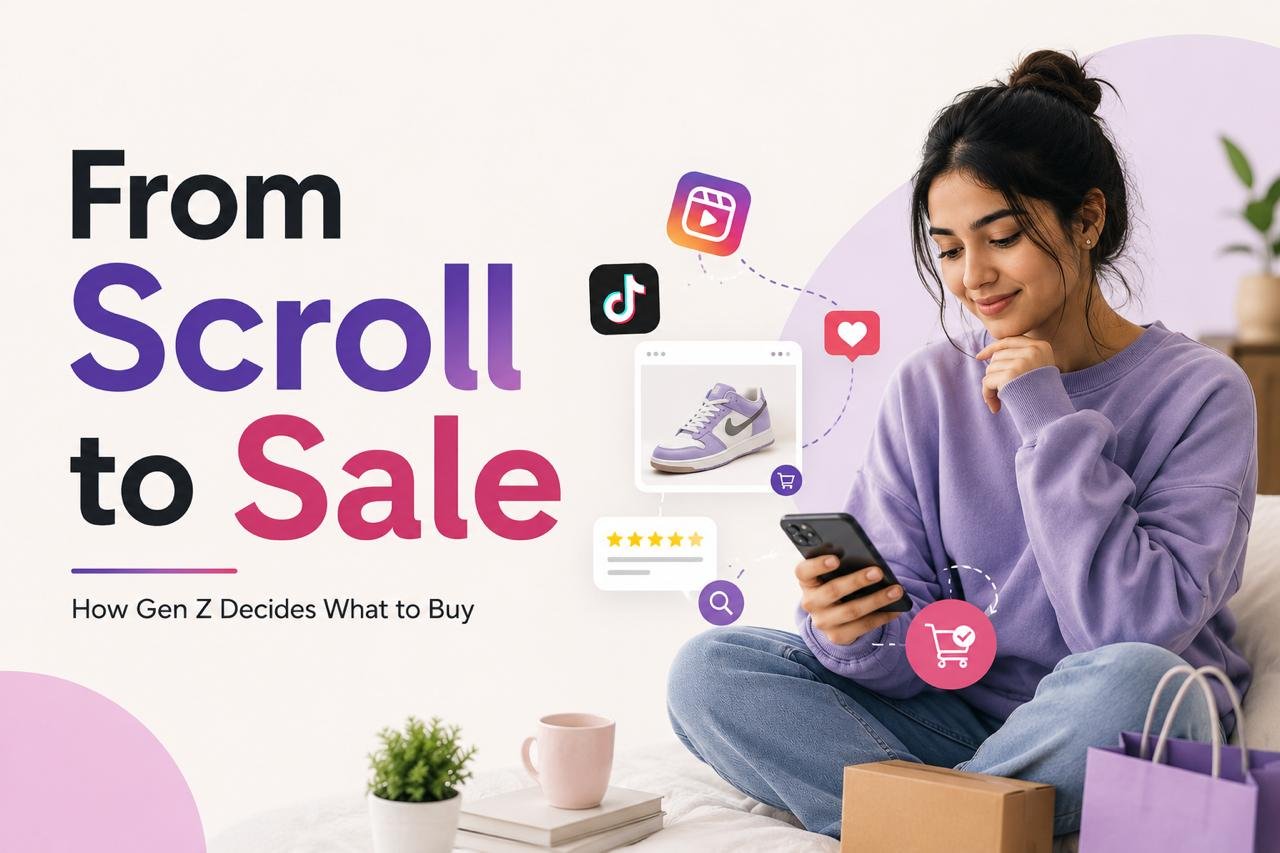
It’s Not Just Shopping Anymore—It’s a Digital Journey
Imagine this.
You’re scrolling through Instagram after a long day. One reel catches your attention—a creator is unboxing a pair of sneakers. They aren’t trying too hard to sell them. They simply share their experience, style them with different outfits, and answer a few questions in the comments.
Within minutes, you find yourself searching for the same sneakers.
You compare prices, watch YouTube reviews, check customer ratings, and maybe even ask a friend if they’ve used them. Before the day ends, you’ve placed your order.
Welcome to the buying journey of Generation Z.
Unlike previous generations, Gen Z doesn’t buy because a brand tells them to. They buy because they discover, connect, research, and trust.
Born roughly between 1997 and 2012, Gen Z has never experienced a world without smartphones, Wi-Fi, or social media. They are digital natives who spend hours consuming content across platforms like Instagram, TikTok, YouTube, Snapchat, and Pinterest. But don’t mistake their screen time for mindless scrolling.
Every scroll is an opportunity.
Every video is a recommendation.
Every comment is a review.
For marketers, understanding this generation isn’t optional anymore—it’s essential.
Let’s explore how Gen Z moves from a simple scroll to an actual purchase and what businesses can learn from their unique buying behaviour.
⸻
The Generation That Doesn’t Want to Be Sold To
Traditional advertising worked because people had limited choices.
Television commercials, newspaper advertisements, radio promotions, and billboards controlled consumer attention.
Gen Z grew up differently.
They can skip ads in seconds.
They install ad blockers.
They ignore banner ads.
They scroll past anything that feels fake.
Instead of asking,
“What does this brand say about itself?”
they ask,
“What do real people say about this brand?”
That single shift has changed digital marketing forever.
Today’s customers are not looking for perfect advertisements.
They’re looking for honest experiences.
⸻
Step 1: Discovery Begins with a Scroll
The buying journey often starts without the customer even planning to shop.
A person opens Instagram to relax.
A funny TikTok appears.
A YouTube Short explains a skincare routine.
An influencer shares a productivity app.
Suddenly, a product enters their mind.
This is called discovery marketing.
Social media is no longer just entertainment.
It has become the world’s biggest shopping mall.
Platforms influencing Gen Z include:
* Instagram Reels
* TikTok
* YouTube Shorts
* Pinterest
* Snapchat Spotlight
These platforms don’t wait for users to search.
Instead, algorithms introduce products based on interests.
This means brands don’t simply compete against competitors anymore.
They compete against every piece of content on a user’s screen.
⸻
Step 2: The Power of Authentic Content
Gen Z has developed an incredible ability to detect fake marketing.
Highly edited advertisements often receive less engagement than simple smartphone videos.
Why?
Because authenticity builds trust.
A creator recording from their bedroom often feels more believable than a million-dollar commercial.
Brands are now focusing on:
* Behind-the-scenes videos
* Day-in-the-life content
* Honest product demonstrations
* Customer testimonials
* Employee-generated content
People don’t connect with logos.
They connect with people.
That’s why user-generated content has become one of the strongest marketing tools.
⸻
Step 3: Trust Is Built Through Community
Before making a purchase, Gen Z investigates.
They don’t just read product descriptions.
They explore:
* Customer reviews
* Reddit discussions
* Instagram comments
* TikTok reactions
* YouTube reviews
* Google ratings
Sometimes they spend more time researching than actually shopping.
One negative review won’t necessarily stop them.
But hundreds of fake five-star reviews certainly will.
Transparency matters.
Brands that openly answer criticism often earn more respect than brands pretending everything is perfect.
Trust is no longer created by advertisements.
It’s created by conversations.
⸻
Step 4: Influencers Are the New Word-of-Mouth
Celebrity endorsements still exist.
But Gen Z often trusts creators with 10,000 followers more than celebrities with 10 million.
Why?
Because micro-influencers feel relatable.
They answer comments.
They share real experiences.
They admit product flaws.
Their audiences feel like friends rather than followers.
For brands, partnering with smaller creators often produces better engagement and stronger conversions than expensive celebrity campaigns.
Influence today isn’t measured only by follower count.
It’s measured by credibility.
⸻
Step 5: Values Matter More Than Ever
Previous generations often focused mainly on price and quality.
Gen Z certainly cares about both.
But they also ask deeper questions.
Does this brand care about sustainability?
Does it treat employees fairly?
Does it support meaningful causes?
Is the company transparent?
Consumers increasingly choose brands that align with their personal values.
This doesn’t mean every business needs to become an activist.
It simply means honesty matters.
Purpose without authenticity is easy to spot.
⸻
Step 6: The Research Phase
Gen Z rarely buys immediately.
Instead, they compare.
One product becomes five.
Five products become ten.
They compare:
* Prices
* Features
* Reviews
* Delivery speed
* Return policies
* Customer service
* Warranty
This behaviour explains why SEO remains essential.
When someone searches,
“Best budget wireless headphones”
or
“Is Brand X worth buying?”
your content should appear.
Educational blogs, comparison articles, FAQs, and helpful videos influence buying decisions long before checkout.
Content marketing isn’t just about traffic.
It’s about trust.
⸻
Step 7: The Purchase Experience Matters
Imagine convincing someone to buy.
They click your website.
Pages load slowly.
Checkout requires multiple unnecessary steps.
Payment options are limited.
They leave.
Marketing succeeded.
The website failed.
Gen Z expects:
* Fast loading pages
* Mobile-friendly design
* Secure payment methods
* One-click checkout
* Easy navigation
* Clear pricing
Convenience directly affects sales.
Every extra click creates another chance to lose a customer.
⸻
Step 8: Social Commerce Is Changing Everything
Shopping no longer requires leaving social media.
Instagram Shops.
TikTok Shop.
Pinterest Product Pins.
Facebook Marketplace.
Consumers can discover and purchase products inside the same app.
The gap between inspiration and purchase has never been smaller.
For marketers, this means content and commerce now work together.
Every post has the potential to become a storefront.
⸻
Step 9: The Unboxing Experience
The customer journey doesn’t end after payment.
In many ways, it’s only beginning.
Gen Z loves sharing purchases online.
Beautiful packaging.
Personal thank-you notes.
Creative presentation.
These small details encourage customers to create free content for brands.
One happy customer can influence hundreds of future buyers.
Packaging has become marketing.
⸻
Step 10: Loyalty Isn’t Bought—It’s Earned
Discounts may create sales.
But experiences create loyalty.
Gen Z stays loyal to brands that:
* Reply quickly
* Solve problems
* Appreciate customers
* Listen to feedback
* Continue delivering value
A loyal customer isn’t simply someone who buys again.
They’re someone who recommends your brand without being asked.
That recommendation carries enormous value.
⸻
The Psychology Behind Gen Z Purchases
Buying decisions are emotional before they become logical.
Gen Z often buys because products help them express identity.
People don’t just purchase shoes.
They buy confidence.
They don’t buy coffee.
They buy lifestyle.
They don’t buy cameras.
They buy memories.
Successful brands understand this.
Instead of selling products, they sell experiences, emotions, and belonging.
⸻
What Digital Marketers Can Learn
If your strategy focuses only on advertisements, you’re already behind.
Modern marketing should focus on:
* Creating valuable content
* Building trust
* Encouraging conversations
* Solving problems
* Educating customers
* Listening to feedback
* Developing long-term relationships
People remember brands that help them.
Not brands that constantly interrupt them.
⸻
Common Mistakes Brands Make
Many businesses still believe louder marketing creates better results.
In reality, Gen Z quickly ignores repetitive promotions.
Common mistakes include:
* Over-editing content
* Buying fake followers
* Ignoring customer reviews
* Posting without a strategy
* Chasing every trend
* Forgetting mobile users
* Focusing only on selling
Marketing isn’t about shouting.
It’s about connecting.
⸻
The Future of Digital Marketing Belongs to Relationships
Artificial Intelligence, automation, personalised recommendations, augmented reality shopping, and predictive analytics will continue changing digital marketing.
But one thing will remain constant.
People buy from brands they trust.
Technology may change.
Human psychology doesn’t.
The brands that combine innovation with authenticity will lead the future.
⸻
Final Thoughts: From Scroll to Sale
Gen Z has transformed shopping into a journey powered by curiosity, community, and connection.
A single scroll can spark interest.
A creator can build trust.
A review can influence a decision.
A smooth checkout can secure the sale.
And an exceptional experience can create lifelong loyalty.
For businesses, the lesson is clear: stop thinking of digital marketing as a way to push products. Start thinking of it as a way to build relationships.
The brands that succeed won’t be the ones with the biggest advertising budgets. They’ll be the ones that understand people, create meaningful content, and deliver genuine value at every stage of the customer journey.
In a world where every thumb swipe is an opportunity, every piece of content matters. Every interaction shapes perception. Every customer has the power to influence thousands of others.
So the next time someone scrolls past your content, ask yourself one question:
Are you simply asking for a sale, or are you giving them a reason to stop, trust, and choose your brand?
Because for Gen Z, the journey from scroll to sale isn’t driven by pressure—it’s driven by connection. And in the future of digital marketing, connection is the most valuable currency of all.